
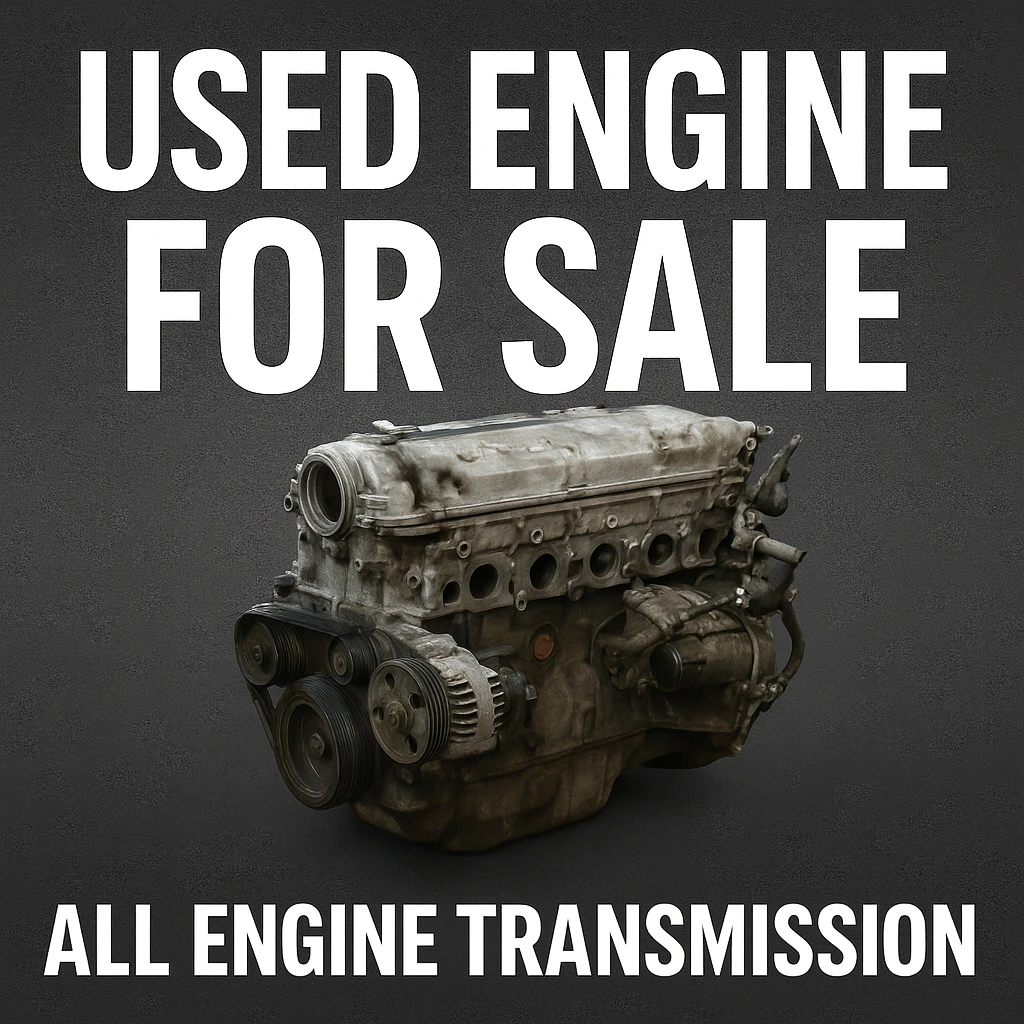
Used Engine for Sale — Buy the Right Engine, Save Money, Drive Confidently
Find high-quality used engines, compare types, check fitment, avoid scams — AllEngineTransmission shows you the simple, safe way to buy.
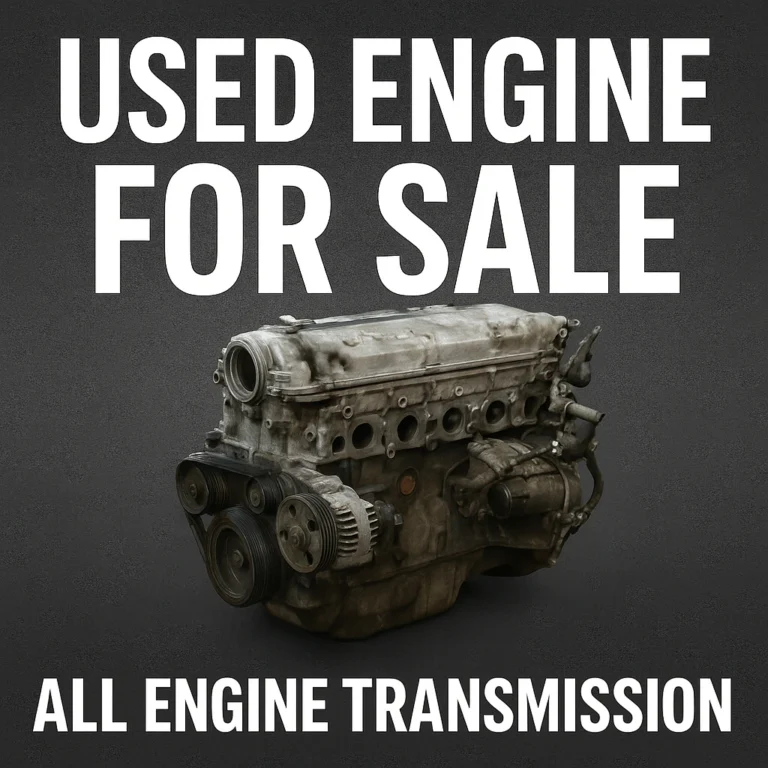
Intro — Why Buying a Used Engine Makes Sense
When your vehicle’s engine fails, the quickest and most cost-effective solution is often choosing a used engine for sale from a trusted supplier. Instead of spending thousands on a brand-new powertrain, a high-quality used engine can restore your vehicle’s performance while saving you 40% to 70% compared to a new replacement. Many of these engines come from low-mileage donor vehicles—often insurance total-loss cars—meaning the internal components are still in excellent condition and capable of delivering reliable, long-term performance.
Buying a used engine doesn’t mean compromising on quality. Modern suppliers follow strict processes including compression testing, leak-down testing, mileage verification, and VIN-based compatibility checks to ensure the engine you receive matches your exact vehicle specifications. Whether you’re looking for a short block, long block, or a complete drop-in assembly, a properly inspected and certified engine can run just as smoothly as your original one.
In a market where new engines can exceed the value of the car itself, opting for a used engine for sale is a smart, budget-friendly, and fast way to get back on the road. This detailed guide will walk you through all the essentials—engine types, pricing, compatibility checks, warranties, installation tips, and how to choose a reliable supplier—so you make a confident, stress-free purchase.
At a glance — what you’ll learn
- Types of used engines (short block, long block, reman, complete)
- Where to buy (marketplaces, specialist dealers, salvage yards)
- How to check fitment and condition before you buy
- Pricing expectations and hidden costs (core charges, shipping, taxes)
- Installation, warranty and returns — what matters most
- A checklist you can use right now
Types of Used Engines (so you can choose the right one)
Short block
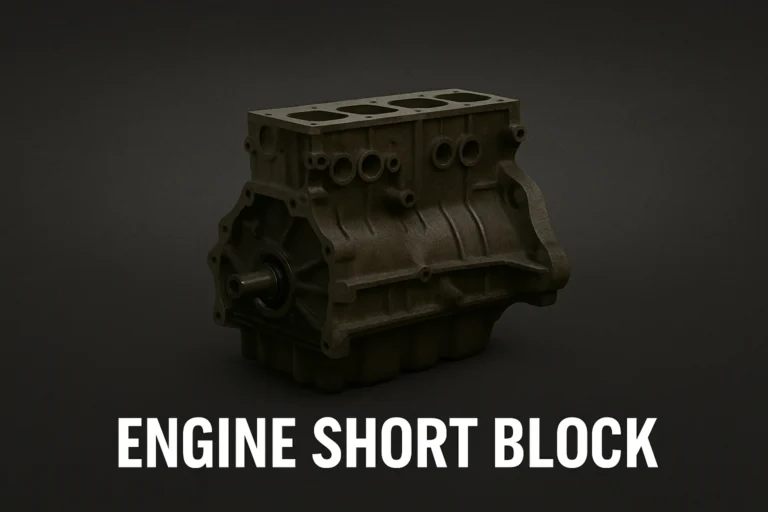
A short block consists of just the lower half of the engine — typically the engine block (cylinder block), crankshaft, pistons, connecting rods, bearings, and sometimes piston rings. It does not include the cylinder head, valvetrain (camshaft, valves, etc.), or external accessories.
When to choose it: Use a short block when the “top end” (heads, cam, valves) of your old engine is still in good shape and you only need to restore the bottom end — for example due to serious crankcase, piston, or rod damage. Because you reuse the old heads and accessories, this option is typically least expensive up front, but requires more mechanical work, parts sourcing, and precise assembly from a mechanic or yourself.
Long block
A long block is more complete than a short block — it includes everything the short block has plus the cylinder head(s), camshaft(s), valves/valvetrain (lifters / rockers / springs), and other internal timing components.
What it usually doesn’t include: many external parts like intake manifold, exhaust manifold, wiring harness, sensors, fuel system components, and other accessories — those often come from your original engine or must be sourced separately.
When to choose it: This is a popular and balanced choice for replacement or rebuilds when both lower and upper ends of the engine show wear/damage. It reduces assembly complexity and mitigates many risks (incorrect valve timing, bad head gasket installs, etc.), making it a more reliable and time-saving option compared to a short block.
Complete (drop-in) assembly
Sometimes referred to as a “crate engine” or “complete used engine,” this option includes everything needed for installation: the full engine (block, heads, valvetrain), plus many of the external parts — intake, exhaust manifolds, accessories, wiring harness, sometimes even the alternator, starter, and other components depending on the supplier.
When to choose it: If you want a “plug-and-play” solution — minimal labor, minimal parts sourcing, and minimal chance of missing or incompatible components — a complete assembly is ideal. Especially good for non-specialist owners or workshops needing a quick swap. The trade-off: this convenience generally comes with a higher price tag compared to a short or long block.
Remanufactured (reman) engines
A remanufactured (reman) engine is one that’s been professionally rebuilt — stripped down, inspected, and rebuilt (often with many worn parts replaced or re-machined) to meet factory (or sometimes better-than-factory) specifications.
Reman options may come in short-block, long-block or full-assembly form, depending on the provider.
Advantages: Because reman engines are rebuilt under controlled conditions, with new or re-machined internals and tested tolerances, they often offer higher reliability, better performance, and longer life than a raw used engine pulled from a salvage car.
Considerations: Reman engines tend to be more expensive than “as-is” used engines. Also check for warranty coverage and build documentation — these help ensure you’re getting the quality you expect.
Why It Helps to Clearly Label Engine Type in Product Listings
- Buyers immediately see what they get vs what they’ll need to source or reuse (heads, accessories, wiring, etc.). This clarity helps compare prices fairly — a short block will be cheaper but may cost more later in parts & labour.
- Helps buyers assess installation complexity and labour effort: short block requires more mechanical work; long block and complete assemblies are closer to drop-in solutions.
- Makes warranty and reliability expectations clearer — a reman engine carries different quality and risk compared to a simple salvaged used engine.
- Lets buyers match the engine type with their budget, needs (repair vs full replacement), and existing engine condition.
Where to Buy — Pros & Cons of Each Channel
When searching for a used engine for sale, choosing the right platform matters as much as choosing the right engine. Every buying channel has its own strengths, limitations, and risk levels. Here’s a clear breakdown so you know exactly where your money is safest and where the best deals usually appear.
1. Marketplace Platforms (eBay, large engine marketplaces, listing directories)
Best for: Rare engines, JDM swaps, fast comparison across multiple sellers.
Online marketplaces offer massive inventory — sometimes thousands of engines — with filters by VIN, model, trim, mileage, fitment year range, and drivetrain. This makes them very useful when searching for unusual engines like JDM swaps (2JZ, K-series, EJ-series, RB-series) or when comparing prices across many sellers.
Pros:
Huge inventory and broad seller pool
Easy VIN-based search tools
Great for rare, discontinued, or imported engines
Ability to compare pricing, mileage, and listings side-by-side
Cons:
Quality varies widely between sellers
Some listings have incomplete engine details
Warranty terms differ and may not be honored
Higher chance of misrepresented mileage or hidden damage
Requires careful seller vetting, checking reviews, and asking for compression/leak-down reports
2. Specialist Engine Dealers (Premium Engine Shops & Trusted Suppliers like AllEngineTransmission)
Best for: Quality-tested engines, verified mileage, warranty protection, and reliable customer support.
Specialist sellers are often the safest and most reliable source when you’re looking for a ready-to-install engine. This is where AllEngineTransmission stands out — offering tested, verified used engines and transmissions shipped across the USA with quality checks, documentation, and warranty options.
Why specialist dealers are preferred by most buyers:
- Engines are compression tested and inspected before shipping
- Verified mileage and detailed history
- Technical support and guidance for compatibility
- Clear warranties (30 days, 3 months, 6 months, 1 year, depending on the engine)
- Better packaging, faster shipping, and safer delivery
- Return policies and proper customer service
- Phone support for installation and troubleshooting
Why AllEngineTransmission is a prime choice: - U.S.–wide shipping for engines & transmissions
- Strict QC (quality control) and verified fitment using VIN
- Customer support that guides you from inquiry to installation
- Competitive pricing without compromising on quality
- Reliable warranty options that build trust and reduce risk
Cons of specialists:
- Slightly higher cost than random local sellers
- High demand may mean limited stock on rare engines
But for most car owners, specialists offer the best balance of price, safety, warranty, and peace of mind.
3. International Suppliers (JDM Exporters, Japan-based engine importers, Alibaba suppliers)
Best for: Japanese domestic market (JDM) engines like 2JZ-GTE, B16A, 3S-GTE, RB25DET, or rare imports.
These exporters often have hard-to-find engines that never came to the U.S. market. Buyers who want performance builds or OEM JDM replacements often rely on Japanese dismantlers.
Pros:
- Access to rare Japanese engines
- Many engines come from low-km vehicles (Japan’s strict inspection laws lead to early scrapping)
- Can be cheaper when buying in bulk
Cons:
- Long shipping times (3–6 weeks typically)
- Import duties, customs paperwork, and freight cost
- Condition can be uncertain unless documented
- No easy warranty enforcement across borders
- Return policies are extremely limited
Ideal for enthusiasts who know what they are doing — not recommended for typical daily-driver replacements.
4. Local Classifieds (Facebook Marketplace, Craigslist, OLX) + Local Junkyards
Best for: Cheapest deals and same-day pickup.
Local sellers and scrapyards can offer surprisingly low prices because there is no middleman. However, this comes with the highest risk.
Pros:
- Lowest upfront cost
- Immediate pickup — great for urgent repairs
- Sometimes you can inspect the donor car onsite
Cons:
- Almost always sold “as-is” with no warranty
- Unknown internal condition
- No compression testing, no leak-down testing
- Mileage may be unverified or incorrect
- Missing components (ECU, wiring harness, sensors, accessories)
- Higher chance of hidden damage or engine failure
If you choose this option, always bring a mechanic for inspection and try to watch the engine running in the donor vehicle.
Price Guide & Total Cost Breakdown (What You’ll Really Spend)
The cost of a used engine for sale varies widely depending on the vehicle make, engine size, mileage, condition, and whether it’s a short block, long block, complete drop-in, or remanufactured unit. Below is a practical, real-world price guide based on common U.S. market trends.
Average Engine Prices by Type
Small 4-cylinder short block
Typical price: $300 – $1,200+
These engines are affordable because a short block includes only the lower assembly (block, pistons, crank, rods). Ideal when your old cylinder head is still good.
Long block / Complete V6 / V8 engines
Typical price:
- V6 long block: $900 – $2,500
- V8 long block: $1,500 – $4,000
- Complete drop-in assemblies: $1,800 – $5,000+
Prices jump depending on mileage, engine code rarity, and demand. Popular trucks & SUVs (Ford F-150, Chevy Silverado, Toyota 4Runner, Jeep Wrangler) often cost more due to high demand.
Remanufactured engines
Typical price: $2,000 – $7,000+
These are professionally rebuilt engines with new or re-machined internals and often come with 1–3 year warranties.
High-end V8s, turbo engines, diesel truck engines (Cummins, Powerstroke, Duramax) can go beyond $8,000 – $12,000.
Hidden Costs You MUST Include in Your Budget
Buying the engine is only part of the expense. Several other charges apply — and ignoring them makes the repair more expensive than expected.
1. Core Charge (Refundable)
Most sellers add a $100 – $800 core charge.
You get this money back after returning your old engine core.
If your old engine is completely destroyed (cracked block), sometimes the core is not accepted, so confirm first.
2. Shipping Costs
Engines are heavy freight items, often 200–700 lbs depending on size.
Expect:
- $150 – $350 for regional shipping
- $300 – $700+ for cross-country freight
Liftgate or residential delivery may add extra fees.
Good news:
Specialist suppliers like AllEngineTransmission often offer discounted or free shipping on select engines, lowering your total cost significantly.
3. Crating, Packaging & Handling
Secure crating to prevent damage can cost $50 – $150 depending on seller policies.
Imported engines require fumigation, documentation, and specialized crating — which adds even more.
4. Customs & Duties (for imported JDM engines)
If buying a JDM or overseas engine:
- Import duties
- Port fees
- Broker charges
- Container handling fees
These can add $150 – $500+ depending on the shipment.
5. Installation & Labor
Labor costs vary by mechanic and engine complexity:
- 4-cylinder engines: $500 – $1,200 labor
- V6 engines: $800 – $1,800 labor
- V8 engines: $1,200 – $2,500+ labor
Turbo engines, AWD systems, hybrids, and German cars often cost more to install due to complexity.
6. Extra Parts Needed After Installation
Always budget for supporting parts:
- New seals & gaskets
- Hoses & belts
- Thermostat
- Spark plugs
- Engine oil & coolant
- Filters
These typically add $150 – $400 depending on the vehicle.
Realistic Total Budget Example
For a typical long block used engine:
Item | Estimated Cost |
Used engine (long block) | $1,800 |
Core charge | $200 |
Shipping | $350 |
Labor | $1,000 |
Fluids, gaskets, belts | $250 |
Total Estimated Cost | $3,500 – $3,700 |
How to Verify Compatibility & Fitment (3-Minute Checklist)
Buying a used engine for sale is not just about price — the real challenge is making sure the engine actually fits your vehicle without modification. A wrong fitment can cost you more than the engine itself, so follow this 3-minute compatibility checklist before finalizing any purchase.
1. Match the VIN or Exact Engine Code (Most Important)
Match the VIN or Exact Engine Code (Most Important)
Your VIN (Vehicle Identification Number) holds all the key details:
- Engine type & size
- Production year
- Emissions standard
- Drivetrain & transmission
- Trim & variant differences
Always match:
✔ VIN
✔ Engine code (ex: 2AZ-FE, 5.3L LC9, K24A, 3.5 EcoBoost)
✔ Model year range (fitment years often shift by 1–2 years)
✔ Transmission type (some engines differ for manual vs automatic)
If the listing doesn’t show the engine code — ask for it.
At AllEngineTransmission, every engine is matched by VIN verification before shipping, minimizing any fitment risk.
2. Review Mileage, Health Report & Compression Numbers
Mileage is important, but condition matters even more.
Request:
- Compression test numbers (a healthy gas engine typically shows 150–200+ psi, even across cylinders)
- Leak-down test (if available)
- A video of the engine cranking or running (for complete drop-ins)
Low compression, uneven cylinder readings, or heavy crank noise are red flags.
Specialist sellers often provide this automatically — another reason why AllEngineTransmission is a safer option than random marketplaces.
3. Ask for Clear Physical Photos
Photos help verify authenticity and reveal hidden issues.
Request images of:
- Serial number pad / engine code stamp
- Mounting points
- Oil pans & timing covers
- Visible leaks or cracks
- Intake/exhaust ports
- Any sensors or accessories included
Good photos eliminate surprises after delivery.
4. Confirm Exactly What’s Included (Short Block? Long Block? Complete?)
Listings may use similar pricing for very different engine types — so always clarify what you’re actually getting.
Ask:
- Is it a short block, long block, or complete drop-in?
- Does it include intake/exhaust manifolds?
- Are sensors, injectors, coils, alternator, or wiring harness included?
- Does it come with a flexplate/flywheel?
- Does it include the ECU?
Why this matters:
Missing parts can add $150–$600 plus extra labor.
At AllEngineTransmission, every listing clearly mentions the engine type and included components.
5. Check Return, Replacement & Warranty Policy
Never purchase an engine without understanding the warranty terms.
Minimum recommended protection:
- 30–90 days warranty for used engines
- 1 year+ for remanufactured units
- Return window of at least 7–30 days for incorrect fitment
- Clear process for claims, shipping, and inspection
Avoid sellers offering “No returns, sold as-is” unless you’re picking up locally and verifying everything in person.
Reputable engine suppliers — like AllEngineTransmission — always offer transparent warranty coverage to ensure risk-free buying.
Trust Signals That Matter (What to Look for on a Product Page)
When shopping for a used engine for sale, the product page itself tells you whether the seller is legitimate or risky. Good sellers invest in transparency — bad sellers hide details. Here are the trust signals you should ALWAYS look for before buying any engine online.
1. A Detailed, Transparent Listing
A trustworthy seller will always provide complete engine information, including:
- Exact engine code (ex: 1GR-FE, 5.3 LC9, 2.4L K24A)
- Mileage (verified, not “unknown”)
- Compression or leak-down report
- VIN of donor vehicle
- Fitment year range
- Engine type (short block, long block, complete)
If a listing has only one line of description or vague details, consider that a red flag.
2. Clear Photos From Multiple Angles
High-quality sellers provide real photos, not stock images.
Look for pictures of:
- Front, rear, left, and right sides
- Serial number/engine code stamp
- Oil pan, timing cover, valve covers
- Mounting points
- Intake/exhaust ports
- Any included accessories
These photos let you confirm condition and avoid “surprise damage” on arrival.
AllEngineTransmission always provides angle-by-angle photos to ensure transparency.
3. Warranty or Short-Term Guarantee (30–90 Days)
A seller who trusts their engines ALWAYS offers a warranty.
Typical warranty options include:
- 30–90 days on used engines
- 6 months – 1 year on remanufactured engines
- Replacement policy if engine is DOA (dead on arrival)
If the listing says “No warranty – No return – Sold as-is”, avoid unless you can inspect the engine physically.
Reputable sites — including AllEngineTransmission — clearly display warranty terms on every product page.
4. Customer Reviews & Seller Reputation
Before buying, check:
- Verified customer reviews
- Seller history and number of years in operation
- Ratings from independent platforms
- Real customer photos or installation videos
Engine sellers with consistent good reviews are typically the most reliable and honest.
5. Clear Shipping, Core Return & Refund Policy
A professional seller will explain all three upfront:
- Shipping policy (freight type, delivery time, liftgate options)
- Core return instructions (how and when to send your old engine)
- Refund/replacement process
This shows the seller operates legitimately — not casually or “off the books.”
Companies like AllEngineTransmission provide structured, written policies to give buyers peace of mind during and after the purchase.
Inspection Tips If You Can See the Engine in Person (Expert Checklist)
When you’re physically inspecting a used engine before buying, these quick checks can save you from expensive surprises:
1. Smell Test — Detect Fuel, Coolant, or Burnt Odor
A healthy engine shouldn’t have:
- Strong raw fuel smell → could indicate injector leaks, washed cylinders, or poor compression.
- Sweet coolant smell → early sign of head-gasket leak or cracked head.
- Burnt oil smell → may suggest worn piston rings or valve seals.
A clean, neutral smell is ideal.
2. Check the Engine Oil for Metal Flakes
Pull the dipstick or ask the seller to drain a bit of oil:
- Shiny flakes / glitter-like particles → internal wear (bearings, crankshaft, cam lobes).
- Sludge or dark thick oil → poor maintenance; proceed with caution.
Reputable dismantlers often show a pre-drain oil pan photo/video — ask for it.
3. Look for Signs of Head Gasket or Head Damage
Visually inspect around:
- Cylinder head edges
- Block-to-head sealing area
- Coolant passages
Warning signs include:
- Dried coolant residue or white crust
- Fresh oil mixing with coolant (milky fluid)
- Rust streaks near head/block junction
- Warped surfaces on aluminum heads
This is one of the most common failure points on overheated engines.
4. Rotate the Crankshaft Manually (If Allowed)
Use a ratchet on the crank pulley bolt:
- Should rotate smoothly without grinding or stiff “binding” spots.
- Compression bumps will feel like resistance — this is normal.
- No rotation at all → seized engine (walk away immediately).
If rotating by hand isn’t allowed, ask for a cranking video.
5. Inspect Mount Points, Oil Pan & Gaskets
Look closely for:
- Fresh silicone sealant (may indicate recent teardown—ask why)
- Cracks on the block, mounts, or pan
- Dampness around rear main seal or timing cover
- Oil seepage around valve covers
Minor sweating is normal for high-mileage engines; active leaks are not.
6. Check Intake & Exhaust Ports
With a flashlight:
- Excessive carbon buildup may hint at high mileage.
- Oil buildup in intake can indicate PCV problems or worn rings.
- Coolant traces in ports = walk away.
7. Ask the Seller to Perform a Quick Compression or Leak-down Demo (If Possible)
Some sellers can provide:
- Compression numbers
- Leak-down percentage
- Cold start video
- Vacuum test results
These are strong indicators of engine health.
8. Verify All Included Accessories
If it’s a:
- Short block — only the bare essentials.
- Long block — heads + cams included.
- Complete engine — alternator, intake, sensors, and sometimes harness.
Make sure the accessories match what’s listed. Mismatched components can add hundreds of dollars to the final cost.
Buying online — questions to ask the seller
- Exact engine code / serial number?
- What’s the running condition when removed? (was it smoking, seized, overheated?)
- Any history of repairs? Rebuilds? Accidents?
- Is a core charge required and what’s the refund policy?
- Shipping method and insurance options?
- Do you provide installation referrals?
Installation & post-install checklist
- Replace oil, filter, coolant, belts and seals after install
- Torque settings: use manufacturer specs — tighten in manufacturer sequence
- Check engine mounts and wiring harness fitment carefully
- Run engine at idle and monitor for noises and leaks before road testing
Warranty & returns — what’s reasonable
A 30-day minimum is common for used engines (some specialist repair shops offer longer). A warranty should cover internal failure (not wear items) and include a clear return shipping policy. Bigger retailers and specialist shops will often advertise warranty and shipping — this is a major conversion factor for buyers.
How AllEngineTransmission makes it easy
At AllEngineTransmission, we list engines with complete fitment data, clear photos, and transparent warranty information so you can purchase confidently. When you buy through AllEngineTransmission you get:
VIN/engine-code match support
Clear photos & compression reports (if available)
Help with shipping options and crating
Expert support to confirm fitment before you pay
Need help finding the right used engine? Contact AllEngineTransmission for a free fitment check and a custom quote — call +1888- 652- 0521 or request a quote now.